Home
Oregon Forest Resources Institute

Main navigation

  • Forest basics
    • History
    • Forest types/tree guide
      • Forest types map
      • Working forest
      • Old Growth
      • Online tree guide
    • Wildlife guide
    • Carbon
    • Forest science
      • Water Cycle
      • Photosynthesis
      • Tree Biology
    • Forest benefits
    • Forest threats
      • Fire
      • Insects
      • Tree disease
      • Climate change
      • Conversion
    • FAQ
  • Forest management
    • Private forest accord
    • Sustainable management
    • Forest ownership (map)
    • Forest laws
      • Replanting
      • Water protection
      • Habitat protection
      • Harvest
      • Forest roads
      • Herbicides
      • Landslides
    • Harvesting trees
      • Balancing competing objectives on public forests
      • Thinning for forest health
      • When is clearcutting the right choice?
    • Forest products
      • Softwood Lumber
      • Engineered Wood
      • Mass Timber Building
      • Special Forest Products
    • Facts & figures
    • Economics
    • Trees to tap
    • 2020 Labor Day Fires
  • Educational programs
    • Publication library
    • Video library
    • Image galleries
    • K-12 programs
    • Rediscovery forest
    • Landowner education
  • About Ofri
    • About OFRI
    • Staff & board
    • Board meetings & materials
    • Blog
    • News & social
    • News releases
    • Press materials
    • Public review
/cart
 
  • Forest Activity Sheet

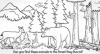
    This four-page, black-and-white illustrated activity sheet is a great way for youngsters to learn about Oregon’s forests, the wildlife that lives there and what ordinary products come from wood. Large, simple illustrations are great for coloring.

    Forest Activity Sheet
  • Forest Essays: Grades 2-3

    This collection of readings supports literacy skills and also teaches important Oregon science and social science topics. The leveled narratives were written by natural resource specialists, then reviewed by teachers (for appropriate content and readability) and scientists (for accuracy). Each one-page essay tackles a subject related to Oregon’s vast and critically important forests: wildlife, fish, forestry, tree biology and history. They include multiple-choice and short-answer questions to gauge comprehension. They can be used as an assessment tool or as a teaching resource.

    Forest Essays: Grades 2-3
  • Forest Essays: Grades 4-5

    This collection of readings supports literacy skills and also teaches important Oregon science and social science topics. The leveled narratives were written by natural resource specialists, then reviewed by teachers (for appropriate content and readability) and scientists (for accuracy). Each one-page essay tackles a subject related to Oregon’s vast and critically important forests: wildlife, fish, forestry, tree biology and history. They include multiple-choice and short-answer questions to gauge comprehension. They can be used as an assessment tool or as a teaching resource. 

    Forest Essays: Grades 4-5
  • Forest Essays: Grade 6

    This collection of readings supports literacy skills and also teaches important Oregon science and social science topics. The leveled narratives were written by natural resource specialists, then reviewed by teachers (for appropriate content and readability) and scientists (for accuracy). Each one-page essay tackles a subject related to Oregon’s vast and critically important forests: wildlife, fish, forestry, tree biology and history. They include multiple-choice and short-answer questions to gauge comprehension. They can be used as an assessment tool or as a teaching resource.

    Forest Essays: Grade 6
  • Forest Essays: Grade 7-12

    This collection of readings supports literacy skills and also teaches important Oregon science and social science topics. The leveled narratives were written by natural resource specialists, then reviewed by teachers (for appropriate content and readability) and scientists (for accuracy). Each one-page essay tackles a subject related to Oregon’s vast and critically important forests: wildlife, fish, forestry, tree biology and history. They include multiple-choice and short-answer questions to gauge comprehension. They can be used as an assessment tool or as a teaching resource.

    Forest Essays: Grade 7-12
  • Forest Fact Break: Animations

    Forest Fact Breaks simplify complex topics (such as forest fires) into fun, educational and entertaining animated videos. Using graphics, movement, sound effects and narration, Forest Fact Breaks bring each topic to life in less time than it takes to listen to a song.Topics include:

    Forest Fact Break: Animations
  • Inside Oregon’s Forests – A High School Forestry Curriculum

    Inside Oregon’s Forests includes 12 weeks of lessons covering the history of Oregon forests; tree biology and forest types; the environmental, social and economic importance of forests; forest management; wildfire; and more.The curriculum comes as a 316-page, spiral-bound book. The package includes lesson plans, labs and other activities plus a variety of related documents and videos. It is also available to view online at LearnForests.org.

    Inside Oregon’s Forests – A High School Forestry Curriculum
  • Into the Forest: Student Workbook

    Why should you care about Oregon’s forests? Into the Forest, OFRI’s lively and colorful book on forestry for fifth- and sixth-grade students, answers that question.The student book is 24 pages and gives an overview of Oregon forests, including forest ecology, tree biology, forest management, forest careers and balancing economic, ecological and social values. It includes puzzles and activities for students.

    Into the Forest: Student Workbook
  • Into the Forest: Teacher's Guide

    A companion to Into the Forest, the teacher’s guide includes additional activities, lesson plans and background information to help teachers go deeper into the material included in the student publication. It includes a list of additional resources and is aligned to educational standards.

    Into the Forest: Teacher's Guide
  • Not So Clear-Cut

    Some forest landowners grow timber for wood products. Others focus on wildlife habitat or fire resiliency. Many try to find a balance between environmental and economic values. How and when they decide to harvest trees depends on their specific forest objectives. Learn about those objectives and the differences between harvest methods.

    Not So Clear-Cut
  • Oregon Forest Literacy Plan

    The Oregon Forestry Literacy Plan includes a forest education conceptual framework as well as a scope and sequence, which together offer educators guidance for developing curricula and classroom lessons related to forests. The program’s built-in flexibility makes it useful for a wide range of applications to increase forest literacy, including K-12 classroom instruction, informal education and curriculum materials on forest topics. The program includes examples of activities that relate to Oregon forests.

    Oregon Forest Literacy Plan
  • Oregon's Forests Poster

    Oregon’s forests are among the most diverse in the world. The colorful 24” by 36” poster includes a map showing the statewide locations where the most common conifer and hardwood tree species are found, plus descriptions of ecological and climatic conditions in which they thrive. 

    Oregon's Forests Poster
  • Sounds of the Forest

    This illustrated publication is intended for young readers (grades K-3) and tells the story of some of the animals that live in Oregon's forests.

    Sounds of the Forest
  • The Oregon Way: Forests and Fish

    Oregon’s unique, steady approach to preserving and improving habitat in forest streams is paying off for species such as coho salmon, steelhead and cutthroat trout. And it has happened while the state has maintained a timber harvest that supports more than 60,000 jobs. This 16-page report looks at Oregon’s unique, three-tiered approach to protecting aquatic habitat in our forests.

    The Oregon Way: Forests and Fish
  • Tree identification interpretive signage

    The Oregon Forest Resources Institute has created an interpretive tree identification program. The signs are designed, the supporting website is active, and now the pieces are ready and free for you to use!Here’s what you’ll find in this program packet:- Actual-size, print-ready files for 15 common Oregon tree species- A QR code for 45 tree species- A mobile webpage for each tree species with a detailed description of each treeIt’s a simple and instant way to add interpretive signage to your forest, park or architectural interiors.

    Tree identification interpretive signage
  • Understanding Eastside Forests

    Updated for 2019. This colorfully illustrated publication covers the geology and ecology, major forest types, characteristics of selected trees, disturbance and change, and management of Oregon forests east of the Cascades. It is intended as a guide for forest landowners or others interested in management of east-side forests.

  • Wildlife in Managed Forests: Oregon Forests as Habitat

    As the cornerstone publication for OFRI’s “Wildlife in Managed Forests” series, this booklet provides a background and context for better understanding of the role managed forests play in providing habitat for wildlife. The reader is introduced to an overview of priority actions for wildlife that can be implemented on any age or size of forest. It also provides forest landowners with suggestions for wildlife management planning goals and employs a series of case studies of Oregon landowners who have applied these techniques and goals on their lands.

  • Wildlife in Managed Forests: American Beaver

    This publication on the American beaver is part of OFRI’s “Wildlife in Managed Forests” series, developed for foresters, wildlife managers and landowners as well as interested parties such as conservation organizations, regulators and policymakers. Publications in the series synthesize current research findings about the habitat requirements and ecological roles of various wildlife species in Oregon and the Pacific Northwest. Updated in 2024.

    Wildlife in Managed Forests: American Beaver
  • Wildlife in Managed Forests: Early Seral-Associated Songbirds

    This publication offers scientific background and solutions for managing young forests to promote songbird habitat. It is part of OFRI’s “Wildlife in Managed Forests” series, developed for foresters, wildlife managers and landowners as well as interested parties such as conservation organizations, regulators and policymakers. Publications in the series synthesize current research findings about the habitat requirements and ecological roles of various wildlife species in Oregon and the Pacific Northwest.

    Wildlife in Managed Forests: Early Seral-Associated Songbirds
  • Wildlife in Managed Forests: Deer and Elk

    This publication addresses deer and elk population dynamics, herd productivity, nutritional needs, response to human disturbance and more. It is part of OFRI’s “Wildlife in Managed Forests” series, developed for foresters, wildlife managers and landowners as well as interested parties such as conservation organizations, regulators and policymakers. Publications in the series synthesize current research findings about the habitat requirements and ecological roles of various wildlife species in Oregon and the Pacific Northwest.

    Wildlife in Managed Forests: Deer and Elk

Pagination

  • First page « First
  • Previous page ‹‹
  • …
  • Page 25
  • Page 26
  • Page 27
  • Page 28
  • Page 29
  • Page 30
  • …
  • Next page ››
  • Last page Last »
Image
Footer logo

9755 SW Barnes Rd., Suite 210        
Portland, OR 97225        
Phone: 971-673-2944        
Fax: 971-673-2946

Social Links

  • Twitter
  • Youtube
  • Facebook
  • Linkedin

Footer

  • Related Websites
    • OregonForestFacts.org
    • OregonForestLaws.org
    • LearnForests.org
    • KnowYourForest.org
  • Contacts
    • K-12 Contact
    • Landowner Contact
    • Media Contact

© 2025 All Rights Reserved

Site Map