Home
Oregon Forest Resources Institute

Main navigation

  • Forest basics
    • History
    • Forest types/tree guide
      • Forest types map
      • Working forest
      • Old Growth
      • Online tree guide
    • Wildlife guide
    • Carbon
    • Forest science
      • Water Cycle
      • Photosynthesis
      • Tree Biology
    • Forest benefits
    • Forest threats
      • Fire
      • Insects
      • Tree disease
      • Climate change
      • Conversion
    • FAQ
  • Forest management
    • Private forest accord
    • Sustainable management
    • Forest ownership (map)
    • Forest laws
      • Replanting
      • Water protection
      • Habitat protection
      • Harvest
      • Forest roads
      • Herbicides
      • Landslides
    • Harvesting trees
      • Balancing competing objectives on public forests
      • Thinning for forest health
      • When is clearcutting the right choice?
    • Forest products
      • Softwood Lumber
      • Engineered Wood
      • Mass Timber Building
      • Special Forest Products
    • Facts & figures
    • Economics
    • Trees to tap
    • 2020 Labor Day Fires
  • Educational programs
    • Publication library
    • Video library
    • Image galleries
    • K-12 programs
    • Rediscovery forest
    • Landowner education
  • About Ofri
    • About OFRI
    • Staff & board
    • Board meetings & materials
    • Blog
    • News & social
    • News releases
    • Press materials
    • Public review
/cart
 
  • About the Oregon Forest Resources Institute

    Nearly half of Oregon is covered in forests. These forests provide many social, environmental and economic benefits to the state and its residents, including clean air and water, recreational opportunities, jobs and the wood products that we use every day. It is important that all Oregonians have the opportunity to learn more about the forests where we live, work and play.
    ORFI Logo
  • Cart

  • Video library

    The Oregon Forest Resources Institute produces a wide variety of educational videos covering a range of topics related to Oregon forests, forest management and forest products. A selection of OFRI videos and educational advertising can be viewed below. These and other videos are also posted on OFRI’s YouTube channel, www.youtube.com/user/oregonforests.

    Three scientists in a river
  • News & Social

    OFRI actively engages with the public, K-12 educators and forest landowners to help them better understand topics related to forests, forest management and forest products. We produce numerous publications, online resources and videos as well as organize and co-sponsor tours, events and conferences covering a broad range of current forestry-related topics that we feel serves each of these audiences.Stay up to date with the latest OFRI happenings and news about the forest products industry in Oregon by subscribing to our e-newsletters and publications mailing list below.

    A forest
  • Sunbeams at the coast

  • Oregon’s diverse forests

    Nearly half of Oregon – about 47 percent – is covered in forests, but not all are the same. Because of the state’s varied geography and forest landowners with a range of objectives for their land, there are many different types of forests.

  • Connect with your roots

    For centuries, people have been drawn to Oregon by its beautiful scenery, natural abundance and, especially, its forests. As more and more people arrived, these forests gave way to towns, cities and highways. But through a modern dedication to sustainability, Oregon retains nearly 92 percent of the forest that covered the state in 1850. This is a testament to the commitment Oregonians made to the long-term survival of our forests and the important resources they provide.

    An old mill
  • The 2020 Labor Day Fires

    The Labor Day 2020 windstorm resulted in five simultaneous “megafires”– fires greater than 100,000 acres in size – in Oregon, as well as 12 other fires ranging from 112 to 50,951 acres. All these fires either started or blew up on Sept. 7 and 8, 2020, and in a matter of days more than 1 million acres burned. 

  • Timeline draft

  • Know your forests

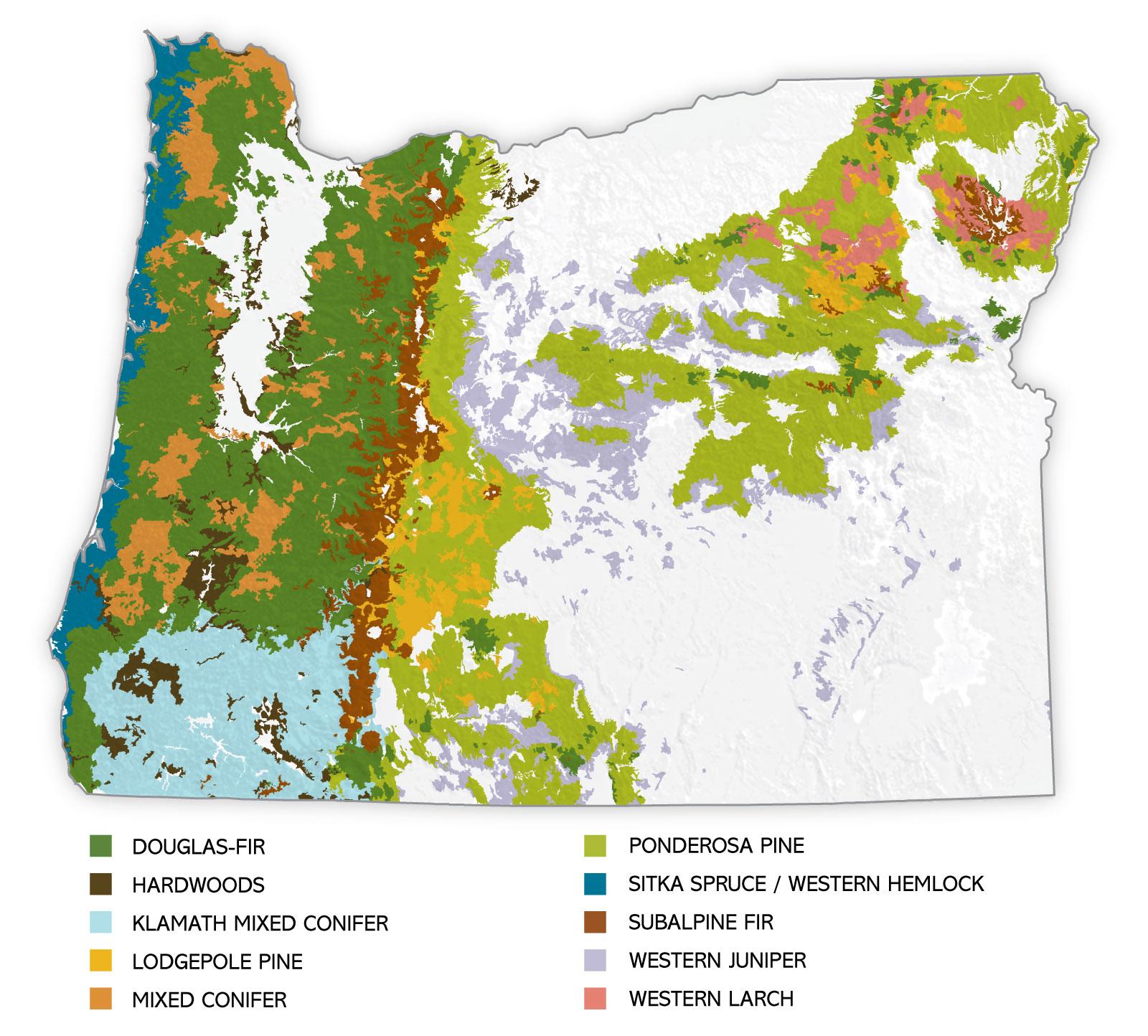
    Oregon is home to many different types of forests, with varying species of trees, plants and wildlife. The forest type that dominates a region depends on climate, elevation, wind and rainfall, temperature and soil conditions.

    Forest type map

    a forest map
  • Replanting is Oregon law

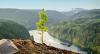
    It is a cornerstone of Oregon’s forest practices rules. Requiring landowners to promptly replant trees after a timber harvest means future Oregonians will enjoy the same forest resources we do today, including wood products, healthy watersheds, recreational opportunities, and thriving fish and wildlife habitat.In a typical year, Oregon forest landowners plant about 40 million seedlings every year. And far more trees are planted each year than are harvested.

    Seedlings, seedlings and more seedlingsPlanting.Landowners must complete replanting of harvested ground within two years.Ensuring success.Within six years of harvest, the young trees must be “free-to-grow.” That means they are vigorous and tall enough to out-compete grass and brush, and will grow into a new forest.Trees per acre.Depending on the site, the rules require that at least 100 to 200 trees per acre survive during reforestation, but landowners typically plant about 400 seedlings per acre.

    a sapling growing on a cliff in the forest
  • Trees of Oregon’s forests

    Traveling across the state, you soon discover that Oregon is home to a wide range of trees. There are 30 native coniferous species and 37 native species of broadleaf trees. Oregon varies greatly in terms of elevation, temperature, wind, rainfall and soil composition. Combinations of all these factors help determine the dominant tree species of an area.

    close up a tree tip
  • The life of a working forest

    Forest landowners and managers are hard at work every day in forests throughout the state. They ensure that trees are thinned, spaced and growing properly, and that excessive dry brush is cleared and other fire hazards minimized. All this is done while maintaining wildlife habitat, biodiversity and water quality.

    62,000 OregoniansThat’s the number of individuals who own between 10 and 5,000 acres of forestland in our state. Their holdings are often referred to as "family forestlands," because many of these properties have been handed down through generations.The amount of timber coming from family forestlands varies greatly depending on market demand for wood products. Family forestlands accounted for about 12 percent of Oregon’s annual timber harvest in 2022.

    Forest road in trees
  • Oregon’s old treasures

    Old-growth forests are more complex than any other kind of forest, and they are home to a diversity of animals, insects, fungi, mosses and lichens. These older forests are a crucial piece of Oregon’s forest mosaic, and provide habitat for threatened species such as the northern spotted owl and the marbled murrelet.Logging of old-growth forests virtually never occurs in Oregon. Today, an old-growth forest in Oregon is much more likely to be lost to wildfire than to timber harvest. What little is harvested is usually done to restore forest health or protect public safety.

    Old growth stand of trees
  • Forests, carbon and climate change

    Increasing amounts of carbon dioxide in the atmosphere, mostly from humans burning fossil fuels, are contributing to warmer global temperatures and climate change. This rise in the average temperature of the land and water on Earth has contributed to melting glaciers, rising sea levels, and longer and more intense wildfire seasons, among other environmental impacts.

    It starts with photosynthesisForest carbon sequestration starts with photosynthesis, the process plants use to take carbon dioxide out of the atmosphere. Chloroplasts inside leaves and needles use carbon dioxide from the air, water from the soil and energy from sunlight to produce glucose, a simple sugar. Trees use glucose to make wood, storing solid carbon in the process. Oxygen is released into the atmosphere as a byproduct.

    wood rings
  • The science of forests

    Forests are complex ecosystems where connections between the trees, plants and animals and environmental factors such as climate, rainfall and soil conditions are not always obvious. Scientific research to better understand forest ecosystems informs the use of forest management techniques that help keep forests healthy and improve fish and wildlife habitat.

    Scientists in stream
  • Forests provide us with clean water

    Wood isn’t the only resource provided by our forests. Streams originating in forests supply water for Oregonians to drink, use in their homes and businesses, and irrigate their fields.Forest soils provide natural filtration that keeps streams clean and water quality high. Most of Oregon’s municipal water systems use water that originates in forests, including areas managed for wood production. The quality of this water is some of the best in the nation.

    a stream
  • Photosynthesis in the forest

    Photosynthesis is a natural process by which trees and plants use energy from the sun and carbon dioxide from the air to make the food they need to live and grow. By storing carbon above and below the ground, the trees and plants in forests contribute to the production of oxygen as a byproduct of photosynthesis.

    Photosynthesis and carbonIn addition to providing us with oxygen that we breathe, forests and photosynthesis also play a vital role in removing carbon dioxide from the atmosphere, helping mitigate the harmful impacts excess carbon dioxide emissions can have on the environment.

    "
  • Life as a tree

    There are two main types of trees: broadleaf trees and conifers. Broadleaf trees have wide, flat leaves. Conifers, which are the most common type of tree found in Oregon forests, have narrow leaves that look like needles or scales.Broadleaf trees generally have leaves that change color, drop off in the fall and are regrown in the spring. These trees essentially “hibernate” during the winter. When the sun shines more in the spring, the trees grow new leaves.

    "
  • The many benefits of forests

    Oregon depends on its forests in many ways. They help filter drinking water, provide habitat for a diverse array of plants and animals, supply oxygen, moderate temperatures and store atmospheric carbon. Forests are a wonderful playground and quiet outdoor retreat. By supplying us with timber, a renewable resource we use to make lumber, paper and heat, forests also support jobs for tens of thousands of Oregonians, especially in rural communities.Forests provide environmental, social and economic benefits to all Oregonians, now and into the future.

    Forest Fact Break: SustainabilityThis 90-second animated video looks at forest sustainability. How do we protect our forests for the future, while also providing the wood and paper products we use every day? It’s a head-scratcher, isn’t it? Forest managers and scientists are working to find a balance to ensure long-term forest sustainability in Oregon. This video is part of OFRI’s Forest Fact Breaks series, which uses bold animated graphics, sound effects and narration to teach about natural resource topics in a fun, easy-to-understand way.

    A stream in a forest

Pagination

  • First page « First
  • Previous page ‹‹
  • …
  • Page 21
  • Page 22
  • Page 23
  • Page 24
  • Page 25
  • Page 26
  • …
  • Next page ››
  • Last page Last »
Image
Footer logo

9755 SW Barnes Rd., Suite 210        
Portland, OR 97225        
Phone: 971-673-2944        
Fax: 971-673-2946

Social Links

  • Twitter
  • Youtube
  • Facebook
  • Linkedin

Footer

  • Related Websites
    • OregonForestFacts.org
    • OregonForestLaws.org
    • LearnForests.org
    • KnowYourForest.org
  • Contacts
    • K-12 Contact
    • Landowner Contact
    • Media Contact

© 2025 All Rights Reserved

Site Map